

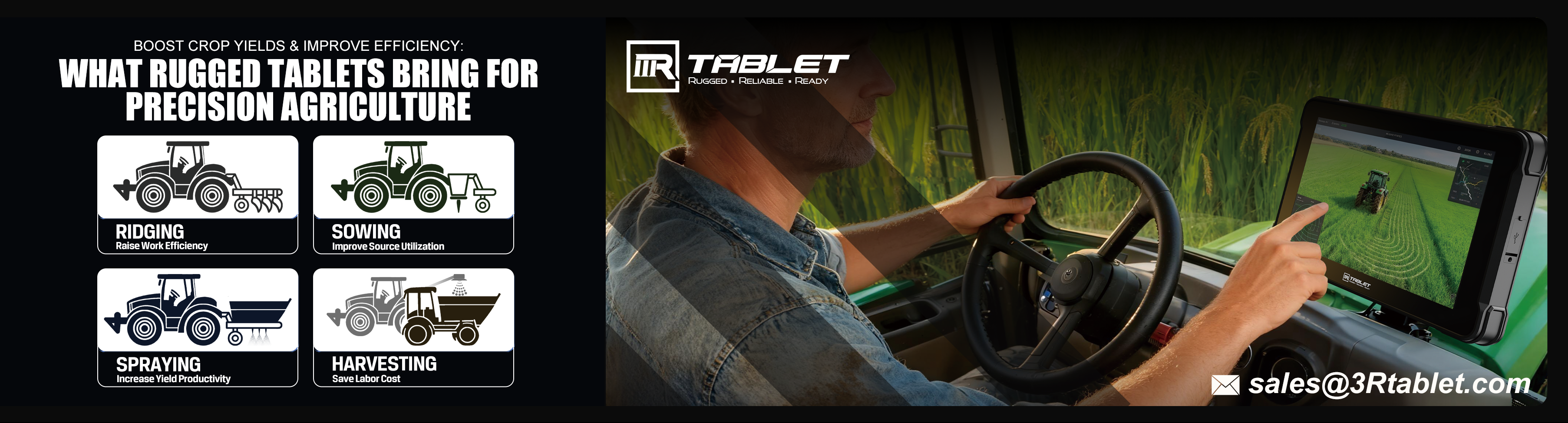
In the wave of modern agricultural transformation from extensive farming to precision farming, technological innovation has become the core to breaking through the efficiency bottleneck and quality dilemma. Today, agricultural machinery such as tractors and harvesters are no longer isolated farming tools but have gradually upgraded into intelligent operation units. As the core interactive and control terminal, rugged vehicle-mounted tablets connect various sensors, enabling farmers and managers to intuitively grasp the whole-process data of field operations, significantly improving work efficiency and resource utilization, and continuously activating the potential of agricultural production.
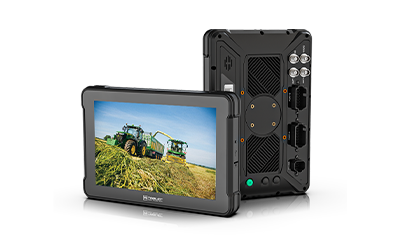
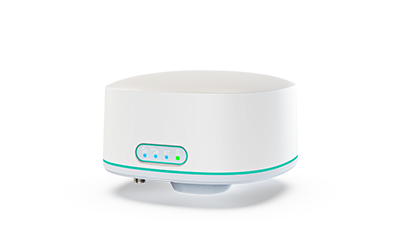
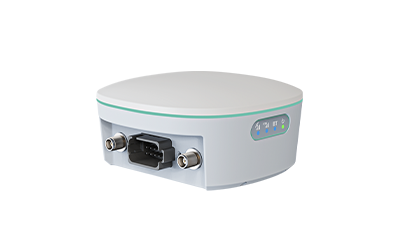
In the core links of agricultural cultivation, it’s crucial to improve efficiency and production by avoiding repeated operations, rework, or missed operations on plots. The tractor automatic steering system consist of RTK base stations, GNSS receivers, and rugged vehicle-mounted tablets is widely used in all scenarios of agricultural machinery operations.The RTK base station installed in an open area receives signals from multiple satellites in real time. By eliminating interferences such as satellite orbit errors and atmospheric refraction through differential calibration technology, it generates high-precision position reference data. The GNSS receiver mounted on the top of the tractor, receives raw satellite signals and the calibration data transmitted by the RTK base station simultaneously. After fusion calculation, it can output the tractor's current three-dimensional coordinates with a positioning accuracy reaching the centimeter level. The rugged vehicle-mounted tablet will compare the received coordinate data and the pre-stores or imports the preset operation trajectory of the farmland (such as straight lines, curves, boundary lines, etc.). Subsequently, the tablet converts these deviation data into clear control instructions (e.g., "Need to turn the steering wheel 2° to the right", "Need to correct the steering angle corresponding to 1.5 cm to the left") and transmits them to the steering wheel controller. Once the steering wheel rotates, the tractor's steering wheels deflect accordingly, changing the direction of travel and gradually offsetting the deviation. For large-scale contiguous farmland, this function significantly improves the uniformity of cultivation; for complex plots such as terraced fields and hills, precise navigation can maximize the use of land resources, completely reduce operation blind spots, and ensure every inch of land is used efficiently.
The implementation of precision agriculture is inseparable from the accurate grasp of key environmental factors such as soil and climate. Taking the weeding as an example, different weed species, growth stages, and crop growth periods have significantly different requirements for weeding methods. Rugged vehicle-mounted tablets connect the sensors and control systems of weeding equipment through interfaces, building a closed-loop management system of "real-time monitoring - intelligent matching - precise regulation": in the chemical weeding, the tablet can connect to soil moisture sensors and weed recognition cameras to collect real-time data such as field humidity and weed species. If dense grassy weeds are detected and the soil is dry, the tablet will automatically push optimization suggestions such as "increasing the dilution ratio of chemicals and slowing down the spraying speed", and farmers can complete parameter adjustments with one click. In the mechanical weeding, the tablet connects to the depth sensor and lifting mechanism of the mechanical weeding shovel to display the depth of entry into the soil in real time. When arrive to the root area of crops, the tablet automatically controls the lifting of the weeding shovel according to the preset "crop protection depth" to only remove surface weeds. When entering the area with dense weeds between rows, it automatically descends to ensure weeding effect while effectively reducing the risk of crop root damage.
In addition, the cooperation between rugged vehicle-mounted tablets and AHD cameras further boosts precision agriculture. In the process of sowing and fertilizing, the AHD cameras installed on the equipment can transmit real-time high-definition images such as seed placement and fertilizer spreading uniformity to the vehicle-mounted display terminal so that farmers can clearly observe the operation details and adjust equipment parameters in a timely manner to avoid missed sowing, repeated sowing, or uneven fertilization, laying a solid foundation for the uniform growth of crops in the early stage. For large agricultural machinery such as harvesters, the multi-channel monitoring and night vision features of AHD cameras enable farmers to observe corp lodging situation and the loading status of transport vehicles even in the morning and night with insufficient light, facilitating the timely dispatch of empty vehicles, reducing operation downtime, and eliminating missed harvesting.
As a manufacturer specializing in rugged vehicle-mounted devices in the field of agricultural intelligence, we have always taken "adapting to complex field environments and meeting the needs of precise operations" as our core, creating high-reliability terminals that are shock-resistant, high and low temperature resistant, waterproof, and dust proof. From navigation and positioning to parameter regulation, from real-time monitoring to intelligent decision-making, our products are deeply integrated into the entire agricultural operation process, empowering every farmer and every agricultural machine with professional technology. In the future, we will continue to iterate and upgrade, explore more possibilities of technological integration, make rugged vehicle-mounted tablets a trusted assistant for precision agriculture, help improve the quality and efficiency of agricultural production, promote the steady development of modern agriculture towards a smarter, greener, and more efficient direction.
Post time: Dec-23-2025
